
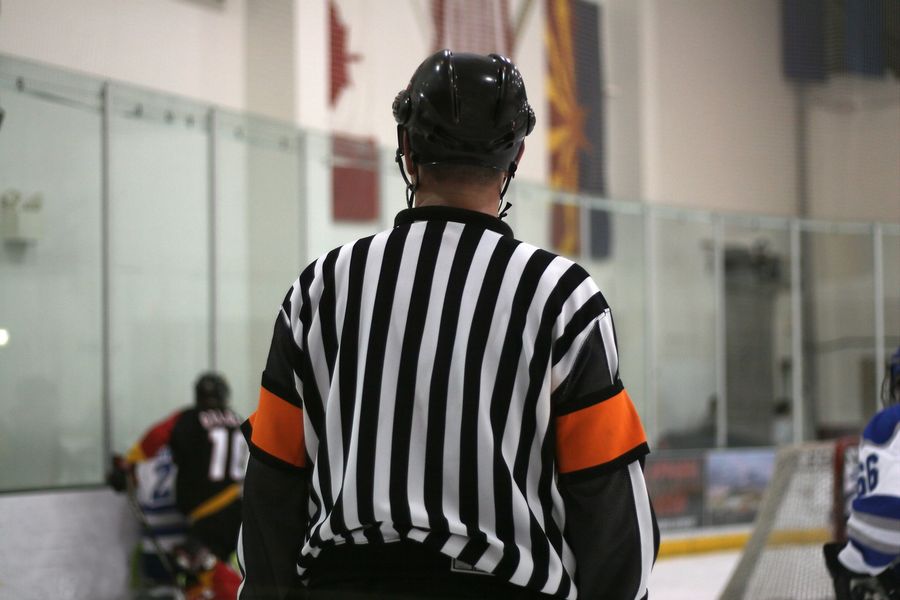
Hockey Rules Explained: How the NHL, PWHL, NCAA, USHL, QMJHL, and USA Hockey Stack Up
Going from watching an NCAA college game to a PWHL game to an NHL broadcast, you’ll see major differences in rules and culture. Each league brings its own quirks to the rink—and for fans, players, and parents, those details matter. That’s because every hockey league uses its own version of the rulebook. The basics are the same: three periods, two nets, one puck. But the details can change quickly. Pro leagues have different overtime formats. Junior leagues handle fighting differently. College players wear full cages, while most NHL players wear only visors. And the rules your kid follows are different again.
That’s because every hockey league uses its own version of the rulebook. The basics are the same: three periods, two nets, one puck. But the details can change quickly. Pro leagues have different overtime formats. Junior leagues handle fighting differently. College players wear full cages, while NHL players wear only visors. And the rules your kid follows are different again.
Here’s a complete breakdown of the rules across the NHL, PWHL, NCAA, USHL, QMJHL, and USA Hockey’s youth and adult divisions. You’ll see what they have in common, where they differ, and why it matters whether you’re a player, parent, or fan.
The Common Ground: What Every League Shares
Before we get into the differences, here's what stays the same no matter where the game is played:
- Three periods of 20 minutes, with the clock stopping on whistles, is the universal standard for everyone from the NHL to most adult and older youth leagues. Younger age groups play shorter periods.
- Five skaters and a goalie per side at full strength.
- Standard rink dimensions are 200 feet by 85 feet for the North American "NHL-size" sheet, which every league on this list uses.
- Offside, icing, and the basic penalty structure are the same: minor (2 min), major (5 min), misconduct (10 min), game misconduct, and match penalty. The main infractions—tripping, hooking, slashing, interference, high-sticking, boarding, and charging—are found in every league.
- One puck. Two nets. Whoever scores the most wins. That part hasn’t changed since 1875.
With this foundation in mind, let's explore how each league puts its own spin on the game.
The NHL: The Standard Everyone Else Adapts From
The National Hockey League sets the standard that most pro and amateur rulebooks use, even when they make changes. Here’s how the NHL plays in the 2025-26 season.
Game Format
- Three 20-minute periods, stopped clock.
- Regular season overtime: Five minutes, 3-on-3, sudden death. If still tied, three-round shootout, then sudden-death shootout if needed.
- Playoff overtime: 20-minute periods at full strength (5-on-5), sudden death, as many as it takes. No shootout, ever.
- Standings: 2 points for any win, 1 for an overtime/shootout loss, 0 for a regulation loss.
Rosters and Physical Play
- 18 skaters and 2 goalies dressed per game.
- Full-body checking is legal and is a core part of the game.
- Fighting is penalized but not banned. The standard punishment is a 5-minute major. Players are not ejected for a single fight, but instigators, aggressors, and those in staged fights face extra penalties.
- Visors are required for any player whose NHL career began in 2013-14 or later. Helmets are mandatory for all.
Notable details
- The goalie trapezoid behind the net restricts where goaltenders can play the puck.
- Coach's challenges for offside, goaltender interference, and missed game stoppages.
- 84-game regular season starting in 2026-27 (currently 82).
- 4-on-4 hand passes are allowed in the defensive zone only.
The PWHL: Innovation on the Women's Pro Stage
The Professional Women’s Hockey League began in January 2024 and embraces rulebook changes. Now in its third season with eight teams—Boston, Minnesota, Montréal, New York, Ottawa, Toronto, plus newcomers Seattle and Vancouver—the PWHL uses NHL rules as a base and introduces unique twists that fans appreciate.
Where the PWHL is Like the NHL
- Three 20-minute periods, stop time.
- 5-on-5 full strength.
- 5-minute, 3-on-3 sudden-death overtime in the regular season.
- Standard minor/major/misconduct penalty structure.
Where the PWHL Differs From the NHL
- To compare the leagues: The PWHL uses a 3-2-1-0 points system, unlike the NHL's 2-1-0 structure. A regulation win earns three points, while overtime or shootout wins are worth two, and overtime or shootout losses get one point. In the NHL, all wins are two points and losses are either one or zero. The PWHL system rewards regulation wins more highly than the NHL does.
- Jailbreak Rule: If a team scores while shorthanded on a minor penalty, the penalty with the least time left ends right away, releasing a player from the box. This rule is unique to the PWHL and can quickly shift a game's momentum.
- No Escape Rule: Players on the team that just took a penalty cannot change lines and must stay on the ice for the next faceoff. This stops teams from putting fresh players on the ice to kill a power play before it begins.
- No trapezoid. Goalies can play the puck anywhere on their side of center ice.
- In contrast to the NHL, which allows open body checking, the PWHL limits body checking: Rule 52 states that a check is legal only if the player is clearly playing the puck or trying to gain possession. Checks made solely to punish or intimidate are penalized. This makes the PWHL's approach to physical play different from the NHL's.
- The PWHL differs from the NHL in its approach to fighting. In the NHL, fighting leads to a 5-minute major and continued play, while in the PWHL, it results in an automatic game misconduct penalty. This approach is closer to IIHF and college hockey than to the NHL standard.
- Best-of-five playoff series in both rounds (semifinals and Walter Cup Final).
- No. 1 seed picks its semifinal opponent — unique among major North American leagues.
- Gold Plan draft order: Once a team is mathematically eliminated, any points they earn in their remaining games count toward their draft position. The eliminated team with the most points after elimination gets the higher pick. This encourages teams to keep playing hard until the end of the season.
NCAA College Hockey: Cages, Ties, and a Different Game
College hockey under the NCAA is often faster and more skill-oriented than most pro leagues. It also has several rules that might surprise fans who only watch the NHL.
Game Format
- Three 20-minute periods, stop time.
- Regular season overtime: Five minutes, 3-on-3, sudden death. Games can end in ties. Conferences may opt to use a three-player shootout to award an extra standings point, but the official result is still a tie.
- Playoff/tournament overtime: 20-minute periods, full strength (5-on-5), sudden death, until someone scores.
- Up to 19 skaters and 3 goalies dressed.
The Biggest NCAA Differences
- All skaters must wear full cages, not visors. This is one of the most noticeable differences between college and pro hockey.
- While the NHL allows fighting with a major penalty, NCAA hockey does not permit fighting at all. Any fight leads to a 5-minute major, a game misconduct, and a one-game suspension. This differs significantly from the NHL, where fighting is part of the culture and handled less strictly.
- Body checking is allowed in men’s hockey but banned in women’s hockey. In women’s NCAA games, body checks get a 2-minute minor penalty, just like in international play and the PWHL.
- Hand passes are completely illegal, even in the defensive zone (NHL allows hand passes in the D-zone).
- If a team scores during a delayed penalty, the penalty is still served, so a team can score and then go on the power play.
- CHL players can now play NCAA hockey. A major 2025 rule change ended decades of separation between major junior and college, opening the door for top junior players to commit to NCAA programs.
USHL: America's Top Junior League
The United States Hockey League is the top USA Hockey-sanctioned junior league in the country. It is Tier I, strictly amateur, and for players ages 16 to 21. About 95% of USHL players go on to NCAA Division I teams. The league follows USA Hockey’s Junior rulebook but has some unique features.
Game Format
- Three 20-minute periods, stop time.
- 5-minute, 3-on-3 sudden-death overtime, then shootout.
- 23 players on the active roster, with up to 18 more on an affiliate list.
Key USHL-specific Rules
- Full face shields required (same as USA Hockey rules for under-18 players who turn 18 during the season; full cages or shields are standard at the junior level).
- Fighting is allowed but comes with heavy penalties. Under USA Hockey Junior Tier I rules, a fight leads to a 5-minute major and a game misconduct. If a player gets a second fighting major in the same game, they receive a game misconduct instead of just a misconduct. Any player who fights in the last five minutes of regulation or in overtime/shootout is automatically suspended for the next two games. Staged fights also result in an automatic game misconduct.
- Body checking is fully legal.
- Players must keep a strict amateur status. They cannot have signed an NHL or pro contract, which protects their future NCAA eligibility.
- Strong development emphasis. Roster construction, ice time, and schedule are all built around college-recruitment readiness.
The USHL is a mix of NHL-style hockey and college-prep hockey. It is physical and fast, but the rules include enough discipline to keep players eligible for the draft and for college.
QMJHL: Canadian Major Junior, with a Modern Twist
The Quebec Maritimes Junior Hockey League (formerly the Quebec Major Junior Hockey League) is one of three Canadian Hockey League circuits, along with the OHL and WHL. It is a feeder for the NHL Draft and uses rules similar to the NHL, except for one major difference that made headlines.
Game Format
- Three 20-minute periods, stop time.
- Regular season overtime: 5 minutes, 3-on-3, sudden death, then shootout.
- Playoffs: Best-of-five for the first three rounds, best-of-seven in the final.
- 200 x 85 ice surface.
Where the QMJHL Stands Out
- Fighting is not allowed. Starting in the 2023-24 season, the QMJHL became the first major junior league in Canada to ban fighting completely. Anyone who fights is automatically ejected. The instigator gets an automatic one-game suspension, and the aggressor gets at least two games. After a second fight in a season, more game suspensions are added. This rule change was made due to growing concussion research and new laws in Quebec regarding amateur sports.
- Helmets and visors are required. Full visors are mandatory for all players.
- Body checking is fully legal, just like in the NHL.
- CHL eligibility changes. As of 2025, CHL players can now commit to NCAA programs without losing eligibility, a major shift in the development landscape.
- NHL-style on-ice rules for offsides, icing, and penalty enforcement.
The QMJHL plays a physical game like the NHL, but without fighting. Some believe this could be the direction pro hockey is heading.
USA Hockey Youth and Amateurs
USA Hockey governs amateur hockey nationwide and uses age classifications rather than geographic divisions. The current age groups all played under the 2025-29 USA Hockey rulebook:
6U | 6 and under | Mini Mite |
8U | 7-8 | Mite |
10U | 9-10 | Squirt |
12U | 11-12 | Pee Wee |
14U | 13-14 | Bantam |
16U | 15-16 | Midget Minor |
18U | 17-18 | Midget Major |
Girls' divisions follow a similar structure (8U through 19U).
Key Youth Rules
- Body checking is not allowed until 14U (Bantam). Below that age, players play under "competitive contact" rules, where physical battles for the puck are allowed, but body checks—hits meant to separate a player from the puck by force—are not. This is a deliberate decision by USA Hockey, based on injury and concussion research.
- No fighting at any youth level. Fighting results in automatic game misconduct and significant suspensions.
- Full cages are required for all youth players.
- There is no tag-up offside at youth levels. Immediate offside applies to all Youth and Girls divisions (high school and adult are excluded). The puck must leave the zone before the attacking team can re-enter.
- At youth levels, teams on the penalty kill cannot ice the puck. High school and adult leagues are exempt from this rule.
- Game length is shorter at younger ages. Periods generally run 12-15 minutes, with stoppages at older youth levels and even shorter for the youngest divisions, many of which play cross-ice or half-ice formats.
- The American Development Model (ADM) shapes practice-to-game ratios, station-based training, and age-appropriate competition.
USA Hockey changed its youth model because early specialization and full-contact play at young ages do not create better players. Instead, they lead to more injuries and burnout.
USA Hockey Adult: The Rules Most of Us Actually Play By
Adult recreational hockey is where most adults who love the game play, and the rules are built around one main idea: people have jobs in the morning.
General USA Hockey Adult League Rules
- Three periods of run or stop time (varies by league).
- No body checking is allowed. Adult rec hockey is non-checking in every league. If you deliver a deliberate body check, like launching your shoulder or hip into another player to separate them from the puck, you get at least a 5-minute major and often a game misconduct. Legal contact in rec hockey is limited to 'competitive contact,' such as battling for position, angling, and leaning. Any forceful hit meant to knock a player off the puck is considered a body check and is penalized. This is the biggest difference between pro and junior hockey.
- "Competitive contact" is allowed in rec hockey. You can battle shoulder to shoulder along the boards, fight for position in front of the net, or angle an opponent off the puck as long as you stay in control. Imagine two players skating side by side, both reaching for the puck near the corner. Jostling and leaning are fine, and you can use your body to win space or shield the puck. It’s also legal to lift sticks, tie up an opponent’s stick, or use soft bumps to keep your position. But if you launch your shoulder, hip, or body directly into another player to knock them off the puck, deliver a big hit, or send them flying, that’s illegal. Those are called body checks and will get you a major penalty. For example, stepping up at the blue line to deliver an open-ice hit or backing a player hard into the boards to separate them from the puck is not allowed in rec play. The key is to play the puck and stay in control, not to go for big hits, so everyone can skate safely.
- Helmets required. Visors, cages, and full shields are all permitted (player's choice).
- Fighting leads to serious penalties. Any player involved gets a 5-minute major, a game misconduct, and usually a 1-2 game league suspension, along with any USA Hockey discipline. After a fight, officials report it to the league, where administrators or committees review the case and decide what to do next. Repeat offenders can get longer suspensions or even be removed from the league, depending on the situation and the league’s rules. This process helps keep games safe and enjoyable for everyone.
- 5-minute majors and head contact rules are strictly enforced. Any contact with an opponent’s head usually results in a 2-minute minor plus a 10-minute misconduct.
- Ties are broken by a shootout in most leagues, or accepted as ties in others.
- No icing on the penalty kill is excluded for adult leagues — adults can ice the puck while shorthanded (unlike the youth rule).
Adult hockey is meant to be fun, friendly, and social, which is exactly why Hockey Finder exists. The rules are designed to make the league safe and welcoming for everyone, whether you’re new to the game or coming back after years away. By focusing on safety and inclusivity, Hockey Finder makes sure that players of all skill levels and backgrounds can enjoy a full game, skate hard, and leave healthy enough to play again next week. No matter who you are, you belong on the ice. Read rules specific to Hockey Finder here.
Side-by-Side: How the Leagues Compare
Period length | 20 min | 20 min | 20 min | 20 min | 20 min | 15-17 min | 12-15 min |
Body checking | Legal | Limited | Legal | Legal | Legal | Legal 14U+ | Not allowed |
Fighting | Penalized, not banned | Game misconduct | Game misconduct + suspension | Major + game misconduct | Banned (auto ejection + suspension) | Auto game misconduct | Major + game misconduct + suspension |
Face protection | Visor (post-2013 players) | Full face required | Full cage required | Full shield required | Visor required | Full cage required | Player's choice |
Regular season OT | 5 min, 3-on-3 | 5 min, 3-on-3 | 5 min, 3-on-3 | 5 min, 3-on-3 | 5 min, 3-on-3 | Varies | Varies |
Can games end in ties? | No | No | Yes | No | No | Yes (some leagues) | Yes (some leagues) |
Points system | 2-1-0 | 3-2-1-0 | Varies by conference | 2-1-0 | 2-1-0 | N/A | N/A |
Goalie trapezoid | Yes | No | No | No | Yes | No | No |
Hand pass in D-zone | Legal | Legal | Illegal | Illegal | Legal | Illegal | Varies |
What This Means for You
If you’re a player, knowing the rule differences between the league you watch and the league you play in matters more than you might think. Adult rec hockey is not the NHL. Body checks and fights that are allowed in pro hockey will end your night, and maybe your season, in a Hockey Finder game.
If you’re a parent, USA Hockey’s youth rules are focused on development, not entertainment. There are good reasons why body checking starts at 14U, and full cages are required. These rules are based on years of injury data and the American Development Model.
If you’re a fan, keeping the rule differences in mind when watching different leagues makes the games more interesting. The PWHL’s Jailbreak Rule changes momentum in ways NHL games can’t. NCAA tournament overtime keeps going until someone scores. Junior hockey is faster and more physical than many people expect.
And if you’re somewhere in the middle - a parent who plays adult rec, a former college player coaching youth, or someone who just started playing last year - Hockey Finder runs leagues, tournaments, clinics, and pickup games based on adult rec hockey rules. These are fun, friendly, social, and built to keep everyone playing for years to come.
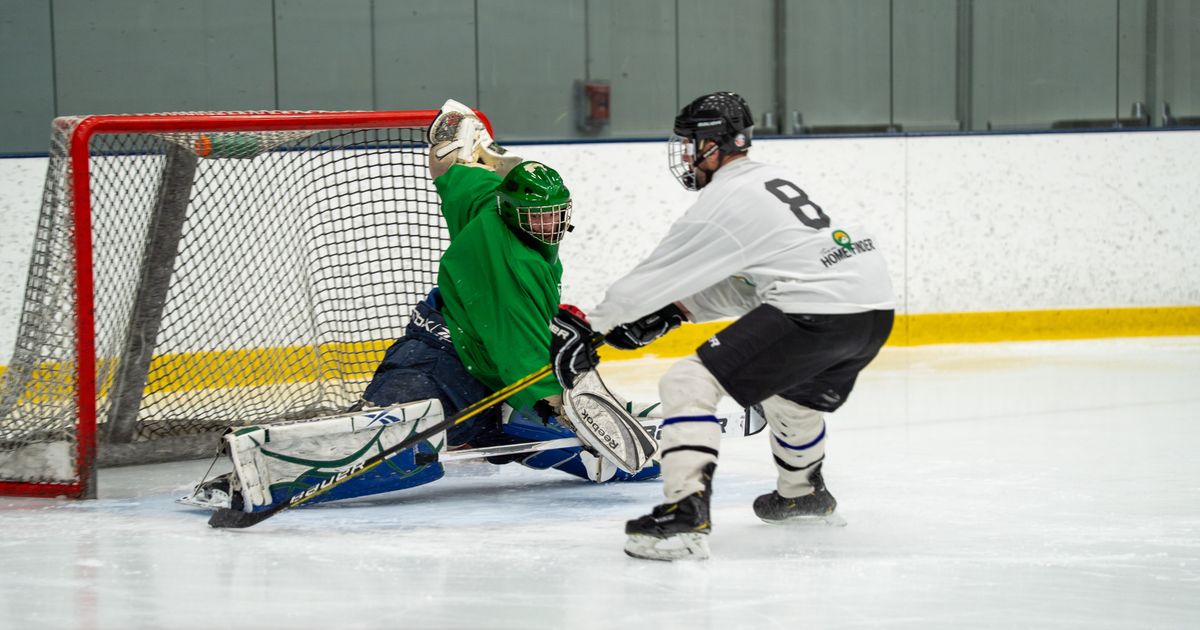
This is the most comprehensive ice hockey glossary you'll find anywhere — built for players, coaches, fans, and everyone in between. Learn hockey lingo today.
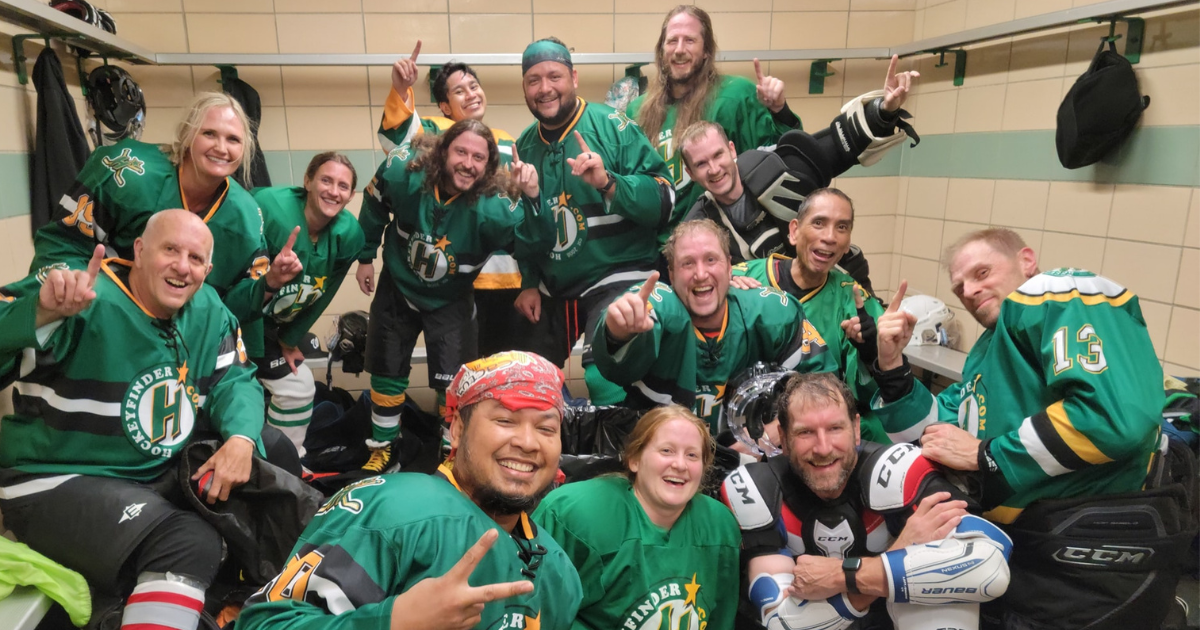
Hockey Finder is built on three simple values: Fun. Friendly. Social. The locker room is just as much a part of that as the ice itself. Here's how to do your part.