
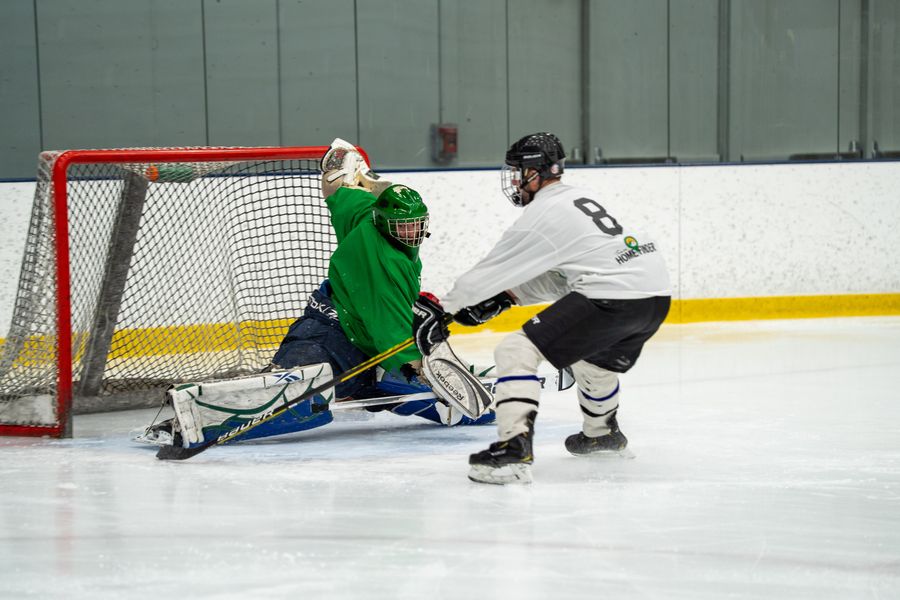
The Ultimate Ice Hockey Glossary: Every Term, Slang Word, and Phrase You Need to Know
Whether you're lacing up for your first adult learn-to-play session, sitting rinkside cheering on your beer league buddies, or watching a Saturday night NHL or PWHL broadcast, hockey has a language all its own. It's a mix of technical skill terminology, old-school chirps from the bench, broadcasting shorthand, and pure rink slang passed down from generation to generation.
This is the most comprehensive ice hockey glossary you'll find anywhere — built for players, coaches, fans, and everyone in between. Bookmark it, share it with a teammate, and the next time someone yells "saucer it!" from the bench, you'll know exactly what they mean.
We've organized everything by category so you can jump straight to what you need.
Skating Terms
Skating is the foundation of hockey. These are the terms coaches use, players drill, and fans hear during powerskating clinics and broadcast breakdowns.
Inside Edge – The edge of the skate blade on the inside of the foot (the big-toe side). Used for pushing off, turning, and generating power. Strong inside edges separate good skaters from great ones.
Outside Edge – The edge on the outside of the foot (the pinky-toe side). Used in tight turns, mohawks, and creative footwork. Players with confident outside edges can change direction without losing speed.
Crossover – A skating stride where one leg crosses over the other to generate speed around a curve or while changing direction. Forward and backward crossovers are essential for every position.
C-Cut – A skating push that carves a "C" shape into the ice, used to generate speed without striding (especially backward). A go-to move for defensemen.
Mohawk – A turn where the heels come together and the feet open to 180 degrees, transitioning from forward to backward (or vice versa) without crossovers. Common in defensive gap control.
Pivot – Any transition from forward skating to backward skating, or vice versa. Defensemen live in their pivots.
Stride – The full extension of a skating push, from knee bend through full leg extension and recovery. A longer, more powerful stride generates more speed.
T-Push / T-Start – A quick acceleration where one skate is perpendicular to the other (forming a "T"), pushing off explosively.
Heel-to-Heel – A skating position where the heels point toward each other, opening the hips for lateral movement.
Tight Turn – A sharp turn made by leaning hard onto the inside edges and dropping the inside shoulder.
Crossunder – On a turn, the outside leg crosses under (rather than over) to generate explosive speed out of the curve. Used heavily at the elite level.
Edge Work – A catch-all for any drill or skill focused on using the blade edges effectively.
Powerskating – Specialized training focused on skating mechanics, edges, and explosiveness.
Backchecking – Skating hard back into the defensive zone after losing the puck.
Forechecking – Pressuring the opponent in their defensive zone to force a turnover.
Puck Skills and Stickhandling
These are the hands-on skills that separate puck movers from puck losers.
Puckhandling / Stickhandling – Controlling the puck with the stick while skating. The umbrella term for all puck-control skills.
Dangle – A creative, deceptive stickhandling move used to beat a defender. "He dangled the D-man right out of his skates."
Deke – A fake or feint that makes a defender or goalie commit the wrong way. Short for "decoy."
Toe Drag – Pulling the puck back with the toe of the blade, often to evade a poke check or open a shooting lane.
Saucer Pass – A pass that flies briefly through the air like a flying saucer, used to clear sticks or skates in the passing lane. "Sauce it over."
Tape-to-Tape – A perfectly placed pass that arrives flat on the receiver's stick blade.
One-Touch Pass – A pass redirected immediately without stopping the puck. Speeds up puck movement.
Drop Pass – Leaving the puck behind for a trailing teammate, usually on a zone entry.
Backhand – Any shot, pass, or handle made with the back side of the stick blade.
Forehand – The natural side of the stick blade (the side most of your puck touches happen on).
Cup the Puck – Tilting the blade over the puck to maintain control during stickhandling or shielding.
Protect the Puck – Using your body to shield the puck from a defender.
Cycle / Cycling – Forwards rotating along the boards in the offensive zone, passing the puck back to teammates while maintaining possession.
Chip and Chase – Flipping the puck past a defender and skating to retrieve it.
Dump and Chase – Dumping the puck into the offensive zone and forechecking to recover it.
Soft Hands – A compliment meaning a player has gentle, controlled stickhandling and finishing ability.
Mitts – Hands, specifically as it relates to stickhandling. "He's got mitts."
Shooting Terms
Every player wants to score. Here's the language around how it happens.
Wrist Shot – A quick, accurate shot generated by rolling the wrists. The most common shot in hockey.
Snap Shot – A shorter, quicker version of a wrist shot using a flick of the wrists and stick flex.
Slap Shot – A powerful shot taken with a full backswing where the stick contacts the ice just behind the puck, loading the shaft like a spring.
Backhand Shot – A shot taken off the back of the blade. Tougher to elevate but harder for goalies to read.
One-Timer – A shot taken directly off a pass without first controlling the puck. The hardest shot in the game to defend.
Snipe – A perfectly placed, high-skill shot that beats the goalie clean — usually top corner. "What a snipe!"
Top Shelf – The upper portion of the net, just under the crossbar. "Top shelf where mama hides the cookies" is the classic phrasing.
Top Cheese / Cheddar – Same as top shelf. "He picked the corner — pure cheddar."
Five-Hole – The gap between the goalie's legs. Numbered hole in the goalie's coverage system (1–4 are the four corners).
Bar Down – A shot that hits the underside of the crossbar and drops straight into the net. One of the most satisfying sounds in hockey.
Bar Out / Post and Out – A shot that hits the post or crossbar and bounces away from the net.
Roof It – Lift the puck high into the net.
Pick a Corner – Aim for one of the four corners of the net rather than just shooting at the goalie.
Heavy Shot – A shot with significant weight and velocity, often hard for the goalie to control.
Quick Release – The ability to get a shot off fast without telegraphing it.
Garbage Goal – A goal scored on a rebound, scramble, or deflection — not pretty, but they all count.
Greasy Goal – Similar to garbage goal. A hard-working, in-tight goal.
Highlight Reel – A goal so good it'll show up on every replay.
Goals, Assists, and Scoring Slang
The fan-favorite category.
Goal / G – A puck fully crossing the goal line. The point of the whole thing.
Apple – Slang for an assist. "He had a goal and two apples last night."
Helper – Another word for assist.
Mickey / Mick – Slang for a hat trick (three goals in one game).
Hat Trick – Three goals by the same player in a single game. Fans throw hats on the ice to celebrate.
Natural Hat Trick – Three consecutive goals by the same player in one game, with no other goals scored in between.
Gordie Howe Hat Trick – A goal, an assist, and a fight in the same game. Named for the legendary Detroit Red Wing.
Four-Goal Game – Sometimes called a "Texas hat trick" or "haul" depending on the region.
Empty Netter – A goal scored into a net after the opposing team has pulled their goalie for an extra attacker.
Power Play Goal (PPG) – A goal scored while on the power play.
Shorthanded Goal (SHG) – A goal scored while the scoring team is on the penalty kill.
Game-Winning Goal (GWG) – The goal that proves to be the difference in the final score.
Insurance Goal – A goal that extends a lead, making a comeback harder.
Tally – Another word for goal. "He's got two tallies tonight."
Bingo / Bing-Bang – Slang for a quick, clean goal off a great passing play.
Celly – A goal celebration. Players are constantly inventing new ones. "That was an elite celly."
Lamp / Lit the Lamp – Score a goal (referring to the red light behind the net that flashes on a goal). "He lit the lamp twice tonight."
Twine – The net. "Found the twine."
Mesh – Same as twine. The netting.
Iron – The post or crossbar. "Off the iron and out."
Sieve – An insulting term for a goalie who's letting in too many goals.
Defensive and Hitting Terms
The unglamorous half of the game.
Backcheck – Skating back hard to defend after a turnover.
Forecheck – Pressuring the opposing team in their own zone.
Gap Control – The space a defender maintains between themselves and the attacking forward. Good gap = tight, but not too tight.
Stick Check – Using your stick to disrupt the puck carrier, either by lifting their stick, poke-checking, or jamming the blade.
Poke Check – Quickly jabbing the stick out to knock the puck off an opponent's blade.
Sweep Check – A wider, sweeping motion of the stick along the ice to take away passing or shooting lanes.
Stick Lift – Lifting an opponent's stick to free the puck or prevent a shot.
Body Check – Using the body (shoulder or hip) to separate an opponent from the puck. Legal in many adult leagues; not in co-ed rec hockey like Hockey Finder.
Hip Check – A low check using the hip, often delivered along the boards. A lost art.
Open Ice Hit – A check delivered in the middle of the rink, away from the boards.
Pin – Holding an opponent against the boards to win a puck battle.
Boxing Out – Using body position to keep an opponent from getting to the puck or net.
Shot Block – A defender sliding, kneeling, or skating in front of a shot to prevent it from reaching the net.
Clearing the Puck – Getting the puck out of the defensive zone.
Icing – When a player shoots the puck from behind their own red line, and it crosses the opposing team's goal line untouched. Results in a faceoff back in the offending team's zone.
Pinch – When a defenseman aggressively moves down from the blue line to keep the puck in the offensive zone.
Stand Up – When a defenseman holds their position at the blue line rather than retreating.
Angling – Steering an opponent toward the boards or away from the middle of the ice using your body and stick.
Positions and Roles
Center (C) – The forward in the middle of the ice. Takes most of the faceoffs, plays both ends of the rink.
Winger (LW / RW) – Forwards on the left and right sides of the ice. Often the goal scorers.
Defenseman (D / D-Man) – Plays behind the forwards. Responsible for defending the zone and starting the breakout.
Goalie / Goaltender (G) – Stops pucks. The most important position on the ice, full stop.
Forward – Any of the three offensive positions (LW, C, RW).
Line – A unit of three forwards who play together (first line, second line, etc.).
Pairing – A unit of two defensemen who play together.
Power Forward – A bigger, physical forward who can score and grind.
Two-Way Player – A player strong at both ends of the ice.
Playmaker – A player whose primary skill is setting up teammates.
Sniper – A pure goal scorer with an elite shot.
Grinder – A hardworking, physical player who wins puck battles but isn't a top scorer.
Enforcer / Goon – A historically tough player whose role was fighting. Largely a relic today.
Pylon – Insulting term for a slow or stationary player. "That D-man is a total pylon."
Goalie Terms
A whole sub-language of its own.
Crease – The blue painted area in front of the net. The goalie's sanctuary.
Butterfly – A goaltending style where the goalie drops to their knees with pads spread wide.
Stand-Up Goalie – An older style where the goalie remains upright on most saves.
Hybrid – The modern combination of butterfly and stand-up.
Glove Side / Blocker Side – Goaltenders are described by which side their catching glove (glove side) or rectangular blocker (blocker side) is on.
Five-Hole – The space between a goalie's pads when they're in butterfly or standing.
Pads – The leg pads goalies wear.
Trapper / Catcher – The goalie's glove.
Blocker – The rectangular pad on the goalie's stick hand.
Paddle – The wide part of the goalie's stick.
Paddle Down – A save technique where the goalie lays the paddle of the stick flat on the ice to cover the low portion of the net.
Post Integration / RVH (Reverse VH) – A modern post-coverage technique. VH stands for "vertical-horizontal."
Hugging the Post – Sealing tight against the post on tight-angle plays.
Rebound Control – A goalie's ability to direct rebounds to safe areas.
Lateral Movement – Goalie pushing side to side from post to post.
Push Off – The goalie's powerful sideways movement, usually off the inside edge.
Robbery / Robbed – When a goalie makes a save no one expected. "He robbed him with the glove."
Stoned – A shooter who was completely denied. "She got stoned on the breakaway."
Hugger – Affectionate nickname for a goalie.
Tender / Twine-Minder / Netminder – All slang for goalie.
Pipes – The goalposts. "Between the pipes" means in net.
The Rink and Equipment
Blue Lines – The two blue lines that divide the ice into three zones.
Red Line / Center Line – The line at center ice.
Neutral Zone – The area between the two blue lines.
Offensive Zone / O-Zone – The zone where your team is attacking.
Defensive Zone / D-Zone – The zone where your team is defending.
Faceoff Circle / Dot – The nine circles/dots where faceoffs occur.
Slot – The high-scoring area directly in front of the net.
High Slot – The area between the faceoff dots, further from the net.
Low Slot – The area closer to the net, still in front of the crease.
Trapezoid – The area behind the net where goalies are allowed to play the puck. They can't play it in the corners.
Boards – The wooden/composite walls surrounding the rink.
Glass – The transparent panels above the boards.
Bench – Where players sit during shifts.
Sin Bin / Box – The penalty box.
Tape / Stick Tape – Cloth tape players wrap around their stick blade and knob.
Lumber / Twig – Slang for a hockey stick.
Sweater / Jersey – Hockey jerseys are traditionally called "sweaters" because they used to literally be wool sweaters.
Bucket / Lid – A helmet.
Cage – The metal mask on a helmet (for full face protection).
Visor / Shield – The half-shield on a helmet.
Tendies / Tendys – Goalie pads.
Wheels – Skates. "Nice wheels."
Hockey Pants / Breezers – The padded pants players wear. "Breezers" is more common in Minnesota.
Garter Belt – Worn to hold up hockey socks.
Jock / Jill – Protective cup.
Penalties and Officiating
Minor Penalty – Two minutes in the box. Most common type.
Major Penalty – Five minutes in the box. Reserved for serious infractions.
Double Minor – Two consecutive minor penalties (four minutes), usually for high-sticking that draws blood.
Misconduct – Ten minutes in the box; team doesn't play shorthanded.
Game Misconduct – Ejection from the game.
Match Penalty – Ejection plus suspension review.
Tripping – Using stick or leg to trip an opponent.
Hooking – Using the stick to impede an opponent's progress.
Holding – Grabbing an opponent or their stick.
Slashing – Swinging the stick at an opponent.
Cross-Checking – Using the shaft of the stick (both hands on the stick) to check an opponent.
Boarding – Checking an opponent dangerously into the boards.
Charging – Taking too many strides or jumping into a check.
Interference – Hitting or impeding a player who doesn't have the puck.
Roughing – Unnecessary physical contact, often after the whistle.
High-Sticking – Contacting an opponent or the puck above shoulder height.
Delay of Game – Often called when a defending player shoots the puck over the glass from their own zone.
Too Many Men – Having more than the allowed number of skaters on the ice.
Offside – When an attacking player crosses the offensive blue line before the puck.
Icing – Covered above. Whistle stops play and a faceoff goes back in the defending zone.
Power Play (PP) – When one team has more players on the ice due to a penalty.
Penalty Kill (PK) – The shorthanded team's effort to defend during the power play.
Five-on-Three (5-on-3) – Two-player advantage power play.
Four-on-Four (4-on-4) – Coincidental penalties leave both teams shorthanded.
Three-on-Three (3-on-3) – Overtime format at most levels.
Stripes / Zebras – The referees and linesmen.
Game Flow and Strategy
Faceoff – The dropping of the puck between two centers to start or restart play.
Breakout – Moving the puck from the defensive zone into the neutral zone.
Rush – A coordinated offensive attack through the neutral zone.
Odd-Man Rush – When the attacking team has more players than the defending team in the rush (2-on-1, 3-on-2, etc.).
Breakaway – A player skating in alone on the goalie with no defenders between them.
Partial Breakaway – A breakaway with a defender chasing but unable to catch up.
Zone Entry – The act of entering the offensive zone with control of the puck.
Dump-In – Shooting the puck into the offensive zone rather than carrying it in.
Forecheck – Pressuring the puck in the offensive zone.
1-2-2 / 2-1-2 / Trap – Common forecheck and neutral zone systems.
Trap / Neutral Zone Trap – A defensive system that clogs the neutral zone to force turnovers.
Pinch – Defenseman keeping a puck in at the offensive blue line.
Cycle – Forwards rotating low in the offensive zone to maintain possession.
Set Play – A pre-planned play, often off a faceoff.
Empty Net – Pulling the goalie for an extra attacker, usually when trailing late.
6-on-5 / Extra Attacker – Same as empty net situation.
Line Change – Substituting fresh skaters for tired ones. Usually happens on the fly.
On the Fly – Substituting players during live action without a whistle.
Shift – The period of time a player is on the ice before changing. Typically 30–60 seconds.
Period – Games are divided into three 20-minute periods (in standard rules).
Intermission – The break between periods. Ice is usually resurfaced.
Overtime (OT) – Extra time played when the game is tied.
Sudden Death – The first goal in overtime ends the game.
Shootout (SO) – A series of one-on-one breakaways to break a tie if overtime doesn't decide it.
Regulation – The standard three periods, before overtime.
Locker Room and Bench Slang
This is where hockey culture really comes alive.
Chirp – Trash talk between players. "He was chirping the whole game."
Bender – A weak skater who looks like their ankles are bending. The ultimate beer league insult.
Beauty / Beaut – A great player, or a great person. Both. "He's an absolute beauty."
Dust – Slang for a player who never plays. "He's been dust all season."
Plug – A bad player. Synonym: bender.
Hoser – Old-school Canadian slang for a loser or scrub.
Gino – A goal. "He had two ginos tonight."
Biscuit – The puck. "Get the biscuit in the basket."
Basket – The net. See above.
Flow – Long, glorious hockey hair flowing out the back of the helmet.
Salad – Same as flow. Hockey hair.
Lettuce – Same thing. The hair.
Mullet – Self-explanatory. A hockey staple.
Sauce – A saucer pass. "He sauced it tape-to-tape."
Wheel – To skate fast, or to chase a date after the game. Hockey is flexible.
Wheelhouse – A player's preferred shooting spot.
Tendy – A goalie.
Pigeon – A player who scores garbage goals off teammates' work without contributing much.
Bardownski – Adding "-ski" to anything makes it more hockey. "Bardownski" = bar down with style.
Twig – A stick.
Tape Job – How a player wraps their stick.
Bucket – Helmet.
Lid – Helmet (same thing).
Tilly – A fight. "Two tillys broke out in that game."
Scrap – A fight.
Drop the Mitts – To fight. "He dropped the mitts in the second period."
Dance / Going / Squaring Up – More fighting terms.
Goon – A player whose main job is to fight.
Heater – A hot streak. "She's on a heater — six goals in three games."
Slumping / In a Slump – A scoring drought.
Soup – The locker room. "See you in soup."
Room – Same — the locker room.
Suit – A team executive or coach in a suit.
Cap – Salary cap (pro hockey).
Rookie / Rook – A first-year player.
Vet – A veteran.
The Letter – Captain's "C" or alternate's "A" on the jersey.
Captain (C) / Alternate Captain (A) – Team leaders, designated by letters on their sweater.
Broadcasting and Stat Sheet Terms
What you'll hear and read during a pro game.
SOG (Shots on Goal) – Shots that hit the net or are saved by the goalie. Missed shots and blocked shots don't count.
+/- (Plus/Minus) – A stat showing how many goals were scored for vs. against your team while you were on the ice at even strength.
PIM (Penalty Minutes) – Total minutes spent in the penalty box.
TOI (Time on Ice) – How many minutes a player has played.
ATOI (Average Time on Ice) – Average per game.
FOW % (Faceoff Win Percentage) – How often a center wins their faceoffs.
SV % (Save Percentage) – Goalie stat: percentage of shots saved.
GAA (Goals Against Average) – Average goals a goalie allows per 60 minutes.
Corsi (CF%) – Advanced stat measuring shot attempt differential while a player is on the ice.
Fenwick – Like Corsi, but excludes blocked shots.
Expected Goals (xG) – A model-based stat measuring shot quality.
Zone Starts – Where a player starts most of their shifts (offensive, neutral, or defensive zone faceoff).
High-Danger Chance – A scoring chance from a high-probability area (typically the slot).
Quality Start – A goalie stat for games where they performed above average.
Shutout (SO) – A goalie game where no goals were allowed.
Empty Net Goal (ENG) – Already covered above.
Trade Deadline – The annual NHL deadline by which teams can trade for the rest of the season.
Waivers – A process by which other NHL teams can claim a player being moved between the NHL and minor leagues.
The Show – The NHL. "He finally got called up to the show."
Tendy – Already covered, but worth noting it's standard in broadcasts now.
Going Top Shelf – Already covered — used constantly in broadcasts.
Coaching Terminology
What you'll hear from behind the bench.
Systems – A team's structured way of playing in each zone (defensive zone coverage, forecheck, breakout, etc.).
Man-to-Man – Defensive coverage where each player guards a specific opponent.
Zone Coverage – Defensive coverage where players guard areas rather than specific opponents.
Wedge / Box Plus One – Common penalty kill formations.
Umbrella – A common power play formation with one player at the point.
1-3-1 – A modern power play setup with a player at the point, three across, and one in front of the net.
Overload – Loading one side of the ice in the offensive zone.
Stretch Pass – A long pass through the neutral zone to a streaking forward.
Quick-Up – A fast outlet pass from a defender to a forward to start the breakout.
Reload – Forwards regrouping when the opposing team gains the puck, instead of forechecking deep.
Read and React – Playing based on what the opponent does rather than running a strict system.
Support – Being in the right position to help a teammate with the puck.
Triangle – A small unit of three players (typically used in puck-support concepts).
F1, F2, F3 – Forwards numbered by their forecheck role. F1 is the first forward in, F2 supports, F3 is high.
D1, D2 – The two defensemen, often differentiated by strong side (D1) and weak side (D2).
Net-Front Presence – A player who screens the goalie and battles for tips and rebounds.
Bumper – A power-play role positioned in the high slot.
Quarterback / QB – Usually the defenseman running a power play from the point.
Half Wall – The area along the boards between the goal line and the blue line. A key power play position.
Strong Side / Weak Side – Whichever side of the ice the puck is on (strong) and the side opposite (weak).
Compete Level – Coaching speak for how hard a player is working. "We need to bring our compete."
Pickup, Beer League, and Rec Hockey Terms
Real-world hockey vocabulary you'll hear at adult leagues.
Beer League – Recreational adult hockey, played for fun (and sometimes a postgame beverage).
Pickup Hockey – Drop-in hockey where players sign up individually rather than as teams.
Stick Time – Open ice time where players can skate and shoot freely, no game structure.
Skate – A pickup or stick time session. "Are you going to the Tuesday skate?"
Goalie Float – A pool of goalies who rotate among pickup skates and leagues.
Sub – A substitute player filling in for someone on a roster.
Rink Rat – Someone who's at the rink all the time. A compliment.
Mites, Squirts, Peewees, Bantams, Midgets – Youth hockey age divisions (mostly being renamed in modern programs).
Adult Learn to Play / LTP – Programs designed to teach hockey to adults from scratch.
Mixer – A casual social hockey event mixing players from different skill levels and teams.
Co-Ed – Mixed-gender hockey, common in adult rec leagues like the ones Hockey Finder runs.
Tournament – A weekend-long event where teams play multiple games in a short window.
Round Robin – Tournament format where every team plays every other team.
Bracket Play – Tournament elimination rounds (quarter-finals, semis, championship).
Championship Bracket / Consolation Bracket – After round robin, top teams play for the title; lower seeds play for placement.
Division – A grouping of teams by skill level within a league (Level 1, 2, 3, 4, etc.).
Drop-In – Pickup hockey where players show up and pay per session.
House League – Recreational league for players of all skill levels, typically organized by a single rink.
Conditioning, Training, and Practice Terms
Bag Skate – A brutal conditioning skating session, usually as punishment. "Coach called for a bag skate after that loss."
Suicide / Suicides – Conditioning sprints up and down the ice.
Stops and Starts – Conditioning drill of stopping and immediately restarting.
Tape-to-Tape Drill – Passing drills.
Half-Ice / Full-Ice – How much of the rink a drill or game uses.
Power Skating Clinic – Specialized training focused on skating mechanics.
Off-Ice Training – Conditioning, strength, and skill work done off the ice.
Dryland – Same as off-ice training.
Shooting Pad – A slick synthetic pad used for shooting and stickhandling at home.
Stickhandling Ball – A weighted plastic ball used to practice handling off-ice.
Skills Session – A practice focused on individual skill development.
Scrimmage – A practice game.
Open Ice / Open Skate – Public ice available for general skating, sometimes for hockey players to use freely.
Old-School and Niche Slang
For completeness, because hockey has layers.
Wheelhouse – A player's favorite shooting spot.
Cherry-Picker – A player who hangs out at the offensive blue line waiting for a breakaway pass instead of backchecking.
Crash the Net – Drive hard to the net for rebounds and screens.
Going Bardownski – Already covered. Worth repeating.
Greasy / Garbage – Goals scored on rebounds, deflections, or scrums.
Buzzsaw Line – A super-energetic, high-energy line.
Energy Line – Usually the fourth line, brought in for momentum.
Checking Line – A defensive-minded forward line tasked with shutting down the opponent's top players.
Top Six / Bottom Six – The top two forward lines (top six) vs. the bottom two forward lines (bottom six).
Top Pair / Second Pair / Third Pair – Defensive pairings ranked by usage.
Healthy Scratch – A player who's available but not in the lineup that night.
Pylon – Slow defenseman. Already covered, but it earns repeating.
Lighting the Lamp – Scoring a goal. Already covered, but it never gets old.
Hockey Finder Community: Bringing the Language to Life
Knowing the language is half the fun. The other half? Getting out on the ice and using it.
Whether you're an adult just lacing up for the first time or a longtime player looking to sharpen your skills, Hockey Finder is here to make hockey easy, fun, and accessible. We run:
- Adult Co-Ed Leagues – At every skill level, from Level 1 (beginner) through Level 4 (advanced)
- Tournaments – Local and travel events across the country
- Clinics and Powerskating – Build your edges, your stride, and your confidence
- Adult Learn-to-Play – Truly start from zero, taught by friendly, patient coaches
- Pickup Hockey – Drop in, meet new people, and play
We believe hockey should be Fun – Friendly – Social — and that's why we built a platform that makes the whole experience easier, from registration to roster management to finding ice time.
So whether you just learned that "apple" means assist or you've been a rink rat for decades, come on out. We'll save you a stall in the room.
Hockey Finder. Hockey Made Easy.
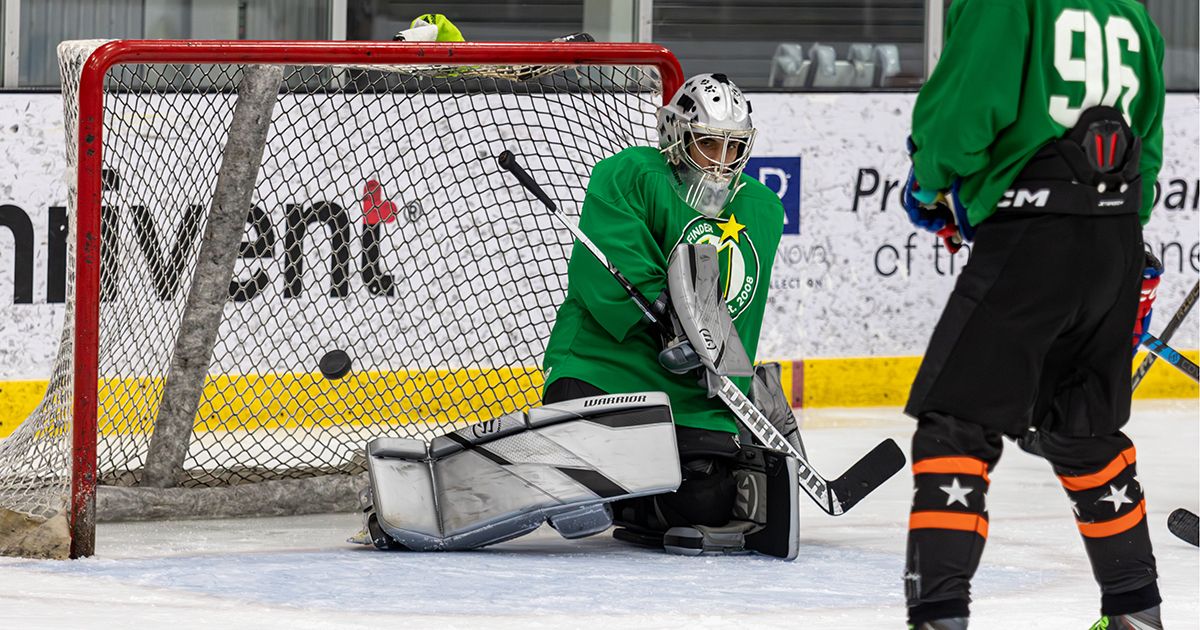
Open skate vs. stick and puck vs. pickup vs. league hockey — what's the difference? A complete guide for adult players choosing the right format.
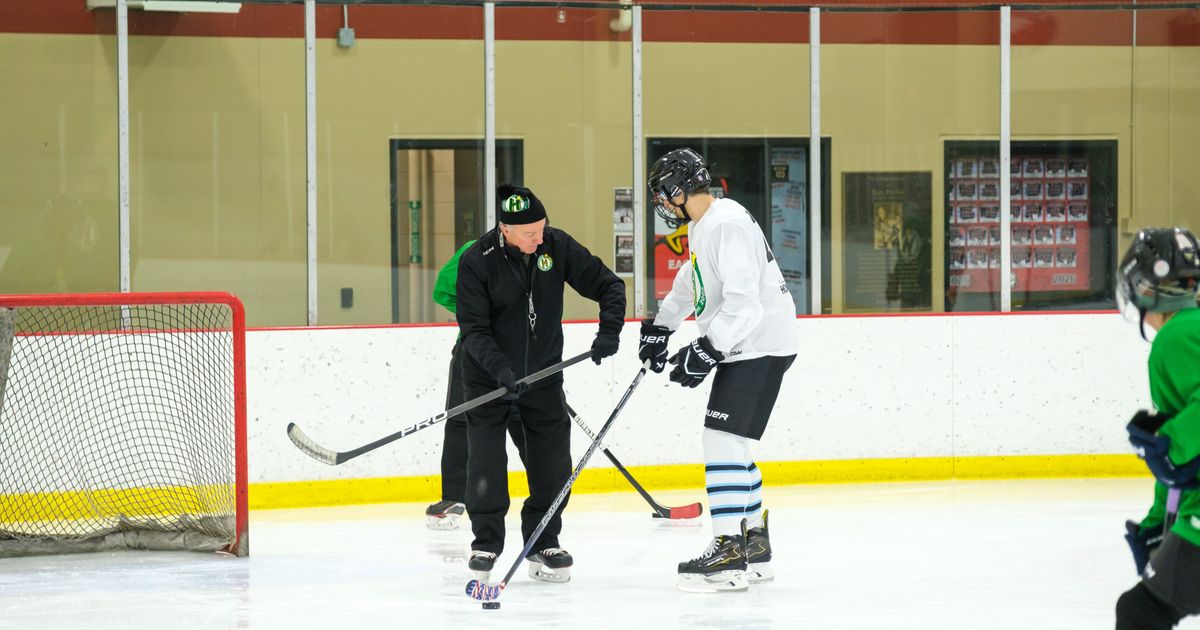
Wondering if it’s possible to pick up ice hockey as an adult? The answer is a resounding yes! Here's why you should know to start playing as an adult.